

Choosing Carpet That Lasts — Not Just Carpet That Feels Good in the Showroom
Almost every carpet feels soft in a showroom. The difference between a carpet that still looks right in five years and one that is flattened and tired in eighteen months is almost never softness. It is fibre, construction and what sits underneath — three things that are easy to check and easy to skip.
That gap matters more in Los Angeles than in most markets. Carpet here contends with intense year-round sunlight through large windows, fine dry dust that works its way into the pile, and a rental and multi-family sector where floors are expected to survive tenant after tenant. A carpet chosen on price alone in that environment does not save money; it simply moves the cost to the next turnover.
This page explains how carpet is made, what the specifications actually mean, and how to match a carpet to the room and the job it has to do. Mill Sales has been a family-owned wholesale flooring supplier in Los Angeles for more than fifty years, buying direct from the mills and taking on closeouts and discontinued lines. You can browse the full carpet catalog at any time — several thousand product lines and tens of thousands of colourways — or read on first.
What Are the Main Carpet Fibres, and Which Should You Choose?
Fibre is the single most consequential decision, because it determines how the carpet responds to being walked on. Everything else adjusts the outcome at the margins.Get in touch
Nylon
Nylon has the best resilience of any mainstream carpet fibre — the ability to spring back after being compressed rather than staying crushed. That is precisely what matters in a hallway, on a staircase, in a traffic lane or under furniture. It is generally the most expensive of the synthetics and generally worth it wherever the carpet has to last through several years of real use or several tenancies. Most nylon sold today carries a factory-applied stain treatment.
Polyester and PET
Polyester — including PET constructions made from recycled content — offers outstanding stain resistance and richer, deeper colour than nylon at a noticeably lower price. Its weakness is resilience: it does not recover from crushing the way nylon does. That makes it an excellent, sensible choice in bedrooms, guest rooms and low-traffic spaces, and a poor one in a main hallway.
Triexta
Triexta, sold under names such as SmartStrand, sits between the two. It has stain resistance built into the fibre rather than applied as a topical treatment, so the protection does not wear off, and its resilience is better than polyester’s. It performs particularly well in homes with pets.
Olefin and Wool
Olefin (polypropylene) is highly resistant to moisture and fading, which makes it common in loop constructions, basements and indoor-outdoor applications — but it has the poorest resilience of the group and can be prone to oily soiling. Wool is the natural option: beautiful, naturally soil-resistant, resilient and expensive, and it needs cleaning products formulated for wool.
One further distinction is worth understanding, and it matters unusually much in this city. In a solution-dyed fibre, colour is added while the fibre itself is being formed, so it runs all the way through. In a piped- or yarn-dyed fibre, colour is applied to the surface afterwards. Solution-dyed carpet resists both sun fading and bleach far better, which in a market with this much light through this much glazing is a real advantage rather than a technicality.
How Is Carpet Constructed?
Construction describes what happens to the yarn once it has been tufted into the backing — whether the loops are cut open, left closed, or combined. It changes both how the carpet looks and how well it disguises everyday life.
- Cut pile. The loops are sheared open so the yarn tips stand upright. Soft, plush and traditional. It shows footprints, vacuum marks and shading most readily.
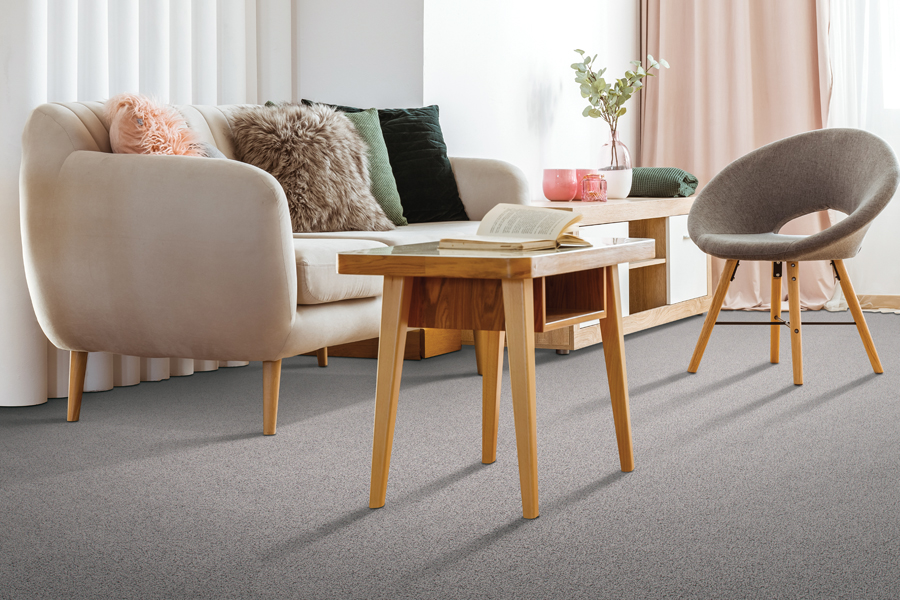
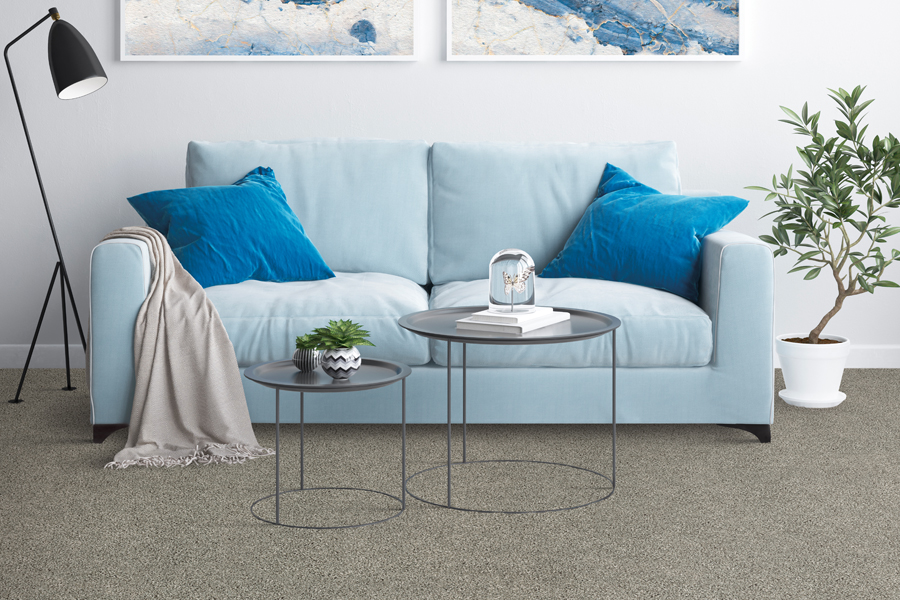
- Textured cut pile. The yarn is twisted and heat-set so the tips face in different directions, scattering light. The most popular residential construction, because it hides footprints and vacuum tracks well while staying soft underfoot.
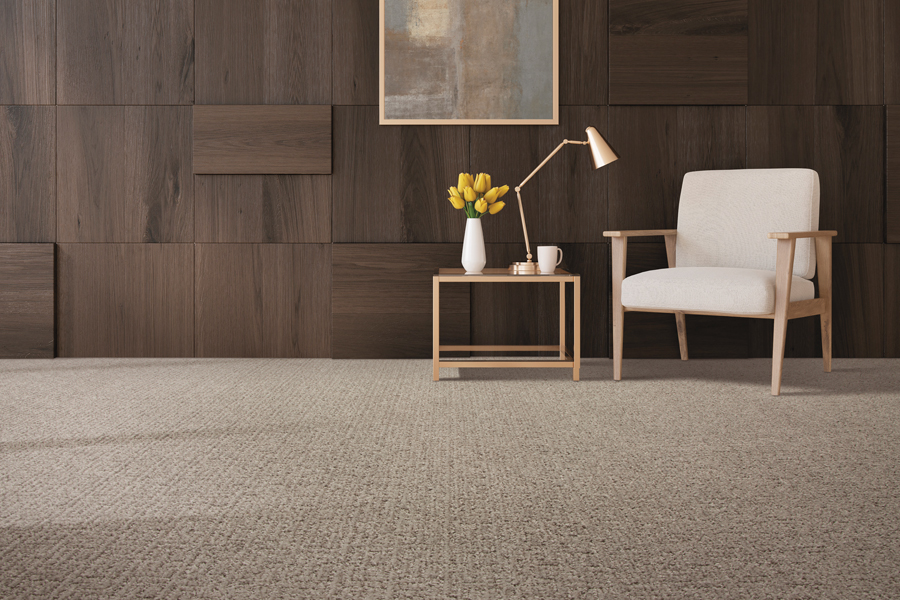
- Loop. The loops are left uncut. Extremely durable and excellent in traffic areas — the reason it dominates commercial specifications. Level loop is uniform and tailored; Berber is a chunkier loop with flecked colour. Loops can snag, so it is worth thinking twice where pets have claws.
- Cut and loop. Cut and uncut yarns combined in the same carpet to create texture and sculpted effects. Good at concealing soil, with more visual interest than a plain surface.
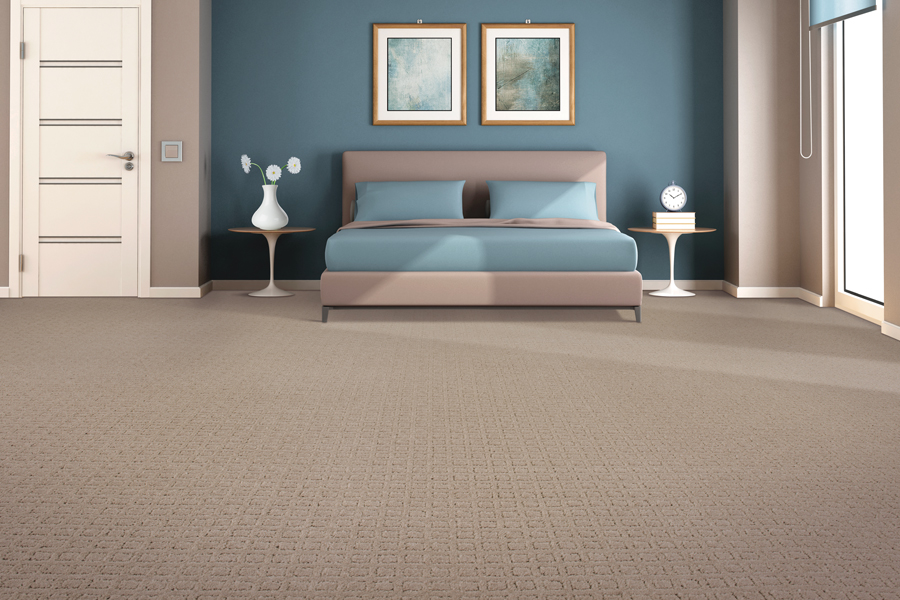
- Patterned. Geometric or organic patterns built into the construction. The most effective of all at disguising wear and soiling, which is why patterned carpet is so common in corridors, stairs and hospitality spaces.
If you are choosing for a busy household or a rental, the shortest useful rule is this: texture and pattern hide life, plain plush advertises it.
What Do Face Weight, Density and Twist Actually Tell You?
Three numbers appear on nearly every carpet specification, and all three are useful — as long as you only compare like with like.
- Face weight is the ounces of yarn per square yard in the pile. More yarn generally means a more substantial carpet, but a high face weight in a poor fibre is still a poor carpet.
- Density describes how tightly the yarn is packed. Denser carpet resists crushing better, and it is often the more meaningful of the two numbers. A practical field test: bend a sample back on itself, and the less backing you can see through the pile, the denser it is.
- Twist level is how tightly each yarn is spun and heat-set. Tighter twist holds its shape longer, particularly in cut pile, and is the main reason two carpets of identical weight can age very differently.
The trap is cross-comparing. Face weight and density are only meaningful between carpets of the same fibre — use them to choose between two nylons, never to argue that a heavy polyester will outperform a lighter nylon in a hallway. It will not.
Why Carpet Cushion Matters More Than People Expect
Cushion — the pad underneath — is where budgets get trimmed and where the consequences show up first. It absorbs the impact of every footstep, and it is what stops the carpet backing from working itself apart under traffic. A good carpet on a poor pad will wear out early and look tired long before it should.
Two points are worth knowing before the decision reaches the installer’s van. Carpet warranties are routinely written around a minimum cushion specification, so the wrong pad can void the warranty on the carpet above it. And thicker is not automatically better: an over-soft, over-thick pad allows too much movement underfoot, which stresses the backing and can cause wrinkling. Firmer, denser cushion is generally the correct answer in traffic areas, with softer options reserved for bedrooms.
Cushion, tack strip, seam tape, transition profiles and adhesives all sit in the same category of things nobody chooses and everybody needs. We stock flooring sundries alongside the carpet itself, so the materials your installer needs can be quoted and collected on the same order.
Which Carpet Suits Which Room?
Matching the specification to the room does more for satisfaction than spending more across the board.
- Comfort outranks resilience. Softer polyester or PET constructions make excellent sense here and free up budget for the areas that need it.
- Stairs and hallways. The hardest-working carpet in any building. Dense nylon in a textured or patterned construction, on a firm cushion. Stairs in particular wear at the nose of each tread, and a tight twist matters enormously.
- Living and family rooms. Textured cut pile is the usual balance of comfort and practicality. If the room takes strong afternoon sun, prioritise a solution-dyed fibre.
- Home offices. A desk chair on castors is punishing. A low, dense loop or a tight textured construction survives it far better than plush — and a chair mat is still a good idea.
- Wet and high-traffic entries. Not a carpet application. A waterproof rigid-core SPC or WPC floor or luxury vinyl is the right specification where water and grit arrive daily.
You can filter the residential carpet range by construction, fibre and colour, and order any product as a sample with free shipping so you can see it in your own light before committing.
Choosing Carpet for Rentals, Turnovers and Multi-Family Properties
For landlords, property managers and investors, carpet is a recurring operating cost rather than a one-off purchase, and the arithmetic is different. The question is not what it costs per square yard. It is how many turnovers it survives before it has to be replaced, and how quickly it can be replaced when it does.
Three decisions carry most of the value. Specify a resilient fibre in traffic areas even where the budget is tight, because a carpet replaced every other tenancy costs more than one that lasts. Favour textured and patterned constructions, which conceal wear and photograph better at listing time. And standardise: running one or two specifications across a portfolio means bulk pricing, faster reordering, and the ability to patch one unit from stock held for another.
Speed matters as much as specification. Every day a unit sits empty waiting on material is revenue that cannot be recovered, which is why in-stock material at a local warehouse is often worth more than a small saving on unit price. Our guide to wholesale sourcing and local warehousing for property managers covers how that works in practice, and our piece on low-maintenance carpet for Southern California households goes deeper on fibre selection.
Commercial Carpet and Carpet Tile in Los Angeles
Commercial carpet is specified against different criteria from residential goods — traffic ratings, appearance retention, colourfastness and flammability — and a meaningful portion of the range is built for it. If you are specifying for an office, a lobby, a leasing suite, a corridor or an amenity space, start in the commercial carpet range rather than in residential product.
For most shared and circulation spaces, carpet tile wins on total cost of ownership even where broadloom looks cheaper installed. A stained or damaged area is replaced tile by tile from attic stock instead of triggering a full reinstall, the modular format handles the irregular geometry of retrofit buildings with far less waste, and tiles can be laid in quarter-turn or ashlar patterns that disguise wear. This breakdown of how carpet tile is built and installed covers backing systems and installation patterns in more detail.
Two compliance points are worth building into any California commercial specification. The state’s green building code sets requirements covering carpet, carpet cushion and carpet adhesive — all three, not just the carpet — so a compliant carpet over a non-compliant pad does not satisfy it. Ask for the documentation at quotation stage and file it with the product data sheet. Where wood is the better answer for a front-of-house space, our hardwood guide covers the commercial options there.
Does Carpet Fade in Southern California Sun?
It can, and this is one of the few flooring questions where the local answer genuinely differs from the national one. Sustained ultraviolet light will lighten surface-dyed carpet over time, and it shows most sharply along the edge of a sunlit patch where faded and unfaded pile meet.
Solution-dyed fibres are the single best defence, because the colour goes all the way through the fibre rather than sitting on it. Beyond the specification, window film and blinds reduce the exposure, and rotating furniture and rugs through the year lets the carpet age evenly rather than in patches. Mid-tone and multi-tonal colours disguise gradual change far better than a flat, dark, uniform colour will.
How Do You Care for and Clean Carpet?
Carpet responds well to a simple routine, and most premature wear traces back to grit rather than stains. Fine dry dust is abrasive; once it works down into the pile it cuts the fibres every time someone walks across it.
- Vacuum properly and often. Traffic areas benefit from more than once a week. Set the beater bar height correctly for the pile — too aggressive damages the surface, too high does nothing.
- Treat spills immediately. Blot, never rub; rubbing drives the spill into the backing and distorts the pile. Work inward from the edge of a spill so it does not spread.
- Stop grit at the door. Entry mats are the highest-return piece of carpet maintenance there is, particularly in this climate.
- Deep clean periodically. Most manufacturer warranties require professional hot-water extraction at defined intervals, and require you to keep the receipts. Check what your specific warranty asks for.
When matting, wear patterns and traffic lanes stop responding to cleaning, the carpet has reached the end of its useful life — our guide to the signs it is time to replace your carpet sets out what to look for.
Where Can You Buy Carpet Wholesale in Los Angeles?
Mill Sales is a wholesale carpet and flooring supplier in Downtown Los Angeles. We buy direct from the mills and we also buy closeouts and discontinued lines, and knowing which of those channels suits your job is worth thinking about before you order.
Closeout and discontinued material is an excellent fit when the entire quantity can be secured at once — a single home, one phase of a build, a defined block of unit turnovers. You get quality goods at a price that would otherwise be out of reach for the allowance. It is the wrong fit where you will need to reorder the same product later or match a repair, because by then the line has gone. For phased or repeatable work, direct-from-mill inventory is the answer.
Whichever route you take, order attic stock at the same time as the main order and from the same dye lot. Dye lots shift between production runs, and the cost of storing two spare rolls or a carton of tiles is trivial next to an unmatched patch in a corridor eighteen months later.
The other variable is distance. Material already sitting in our Downtown Los Angeles warehouse behaves differently on a schedule from material freighted in after the order is placed, and our counter keeps trade hours rather than retail ones — weekday mornings through mid-afternoon, plus Saturday mornings — because that is when contractors and installers actually collect.
We supply homeowners, landlords, contractors, installers, property managers and investors alike. The online catalog is open around the clock and filters by fibre, construction, application and colour; samples ship free; featured products can be previewed in your own room before you order; and project financing is available through a lending marketplace, with pre-qualification that does not affect your credit score.

Browse Carpet at Mill Sales
The full carpet catalog can be filtered by fibre, construction, application and colour, with carpet tile listed separately, and every product can be ordered as a free sample. If you would rather talk it through — one room, a whole house, or a portfolio of units — we will help you narrow it down and price it properly.
Get in touchFeatured Carpet
Frequently Asked Questions
Nylon has the best resilience of the mainstream fibres — it recovers from crushing better than anything else — which makes it the most durable choice for hallways, stairs and traffic areas. Wool performs comparably at a higher price. Polyester and PET resist stains extremely well but crush more readily, so they are better suited to bedrooms and low-traffic rooms.
Broadloom carpet comes in wide rolls and is cut to fit the room; carpet tile comes in modular squares or planks. Broadloom is usually better value inside dwellings, particularly bedrooms. Carpet tile is easier to repair — a damaged tile is swapped individually — and generates far less waste in irregular spaces, which is why it dominates commercial corridors and shared areas.
A resilient fibre such as nylon in a textured or patterned construction, on a firm cushion, in a mid-tone multi-tonal colour. That combination survives more turnovers, conceals wear between tenancies and photographs well at listing time.
Only within the same fibre. Face weight measures ounces of yarn per square yard, so a heavier carpet of the same fibre generally has more substance — but a heavy polyester will not outlast a lighter nylon in a hallway. Density and twist level are often more telling than weight alone.
In almost every case, yes. Cushion absorbs foot impact and protects the carpet backing, and most carpet warranties specify a minimum cushion — installing over an old or inadequate pad can void the warranty and will shorten the life of the carpet above it.
Modern carpet traps particles in the pile rather than letting them circulate, which can be helpful, provided it is vacuumed regularly with a suitable filter and deep-cleaned periodically. Low-pile, densely constructed carpet is easier to keep clean than deep plush.
Surface-dyed carpet can lighten under sustained ultraviolet exposure. Solution-dyed fibres, where the colour runs through the fibre, resist fading far better. Window film, blinds and rotating furniture all help.
Yes. We supply trade customers alongside homeowners, with wholesale pricing, in-stock material at our Downtown Los Angeles warehouse and trade counter hours for collection.
Cover the area plus a waste allowance for cuts, seams and pattern repeat, and set aside attic stock from the same dye lot for future repairs. Colour varies between production runs, so a matching piece is difficult or impossible to source later.
Reimagine your space
Get inspired with our beautiful flooring galleries

1215 W 6th St, Los Angeles, CA 90017 | (213) 482-3005


Copyright © 2026 Mill Sales | Privacy | Accessibility