

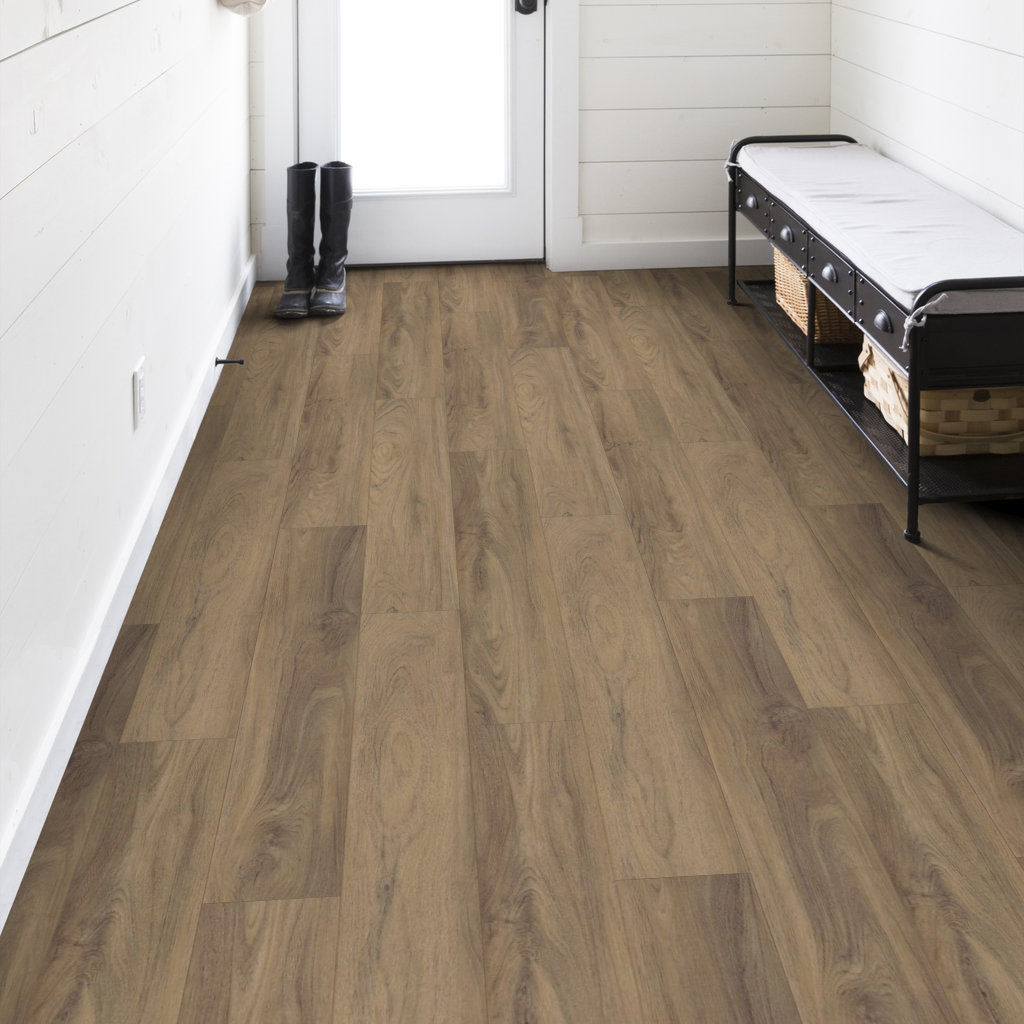
A busy entryway takes a beating. Wet paws, food bowls, scratched-up grit, and the constant in-and-out traffic can wear down a floor fast, especially in Southern California homes where the front door often opens straight into the main living space. In places like Pasadena or Irvine, that first stretch of flooring has to handle dirt, sun, and everyday mess without turning into a maintenance project.
Why laminate makes sense at the door
For most pet households, laminate is the practical starting point. It gives you a hard surface that cleans up quickly, stands up well to claw traffic, and costs less than hardwood when you need to cover a high-use area. On slab homes, which are common across this region, floating floors also install cleanly without the extra buildup that some wood jobs require.
That said, not every product performs the same way near a door. If you expect water bowls, damp shoes, or dogs rushing in from the yard, it is smarter to look at waterproof laminate options instead of a basic floor that may be less forgiving around repeated moisture. We also tell customers to pay attention to surface detail, because textured laminate styles tend to hide dust, paw prints, and small bits of grit better than smoother looks.
Pets bring wear, but also moisture and cleanup issues
Most people focus on scratches first, but moisture is usually what ruins an entryway. A dog splashing water out of the bowl or a rainy-day leash corner can do more long-term damage than claws if the material is not built for it. That is one reason we steer readers to laminate flooring basics when they are comparing core construction, wear layers, and locking systems instead of shopping by color alone.
Climate matters too. Inland areas like Rancho Cucamonga deal with hotter, drier conditions than the coast, and that can expose weak materials faster over time. A floor by the front door also sees hard UV exposure in sunlit homes, so the best choice is usually the one that balances easy cleanup, stable installation, and a finish that does not show every speck by noon.
Where carpet still works nearby
Carpet is usually not the best flooring inside the main pet entry zone, but that does not mean it has no place around it. In adjacent bedrooms, stairs, or a hallway that branches off the mudroom, softer flooring can still make sense if you want traction and noise control. The key is choosing something built for real life, not just a soft feel in the showroom.
For homes that want carpet beyond the hard-surface landing area, pet-friendly carpet styles are worth a close look because they are designed around stain resistance and easier cleanup. If shedding, tracked-in debris, and repeated vacuuming are part of daily life, a durable fiber like nylon carpet often holds appearance better than cheaper alternatives over the long run.
Think about the transition, not just the material
The best entryway floor is not just durable. It has to work with the rest of the house. In many homes we see at Mill Sales, the smartest layout is a hard-surface landing at the door with a clean transition into nearby rooms, so mess stays contained without making the whole house feel cold or noisy.
That approach works well for homeowners, but it also helps landlords and contractors who need faster turnovers and fewer call-backs. After five decades in business, we have seen that simple, durable choices usually outperform trendier ones in the spots that get the most abuse. If you want help narrowing down the right fit for your pets, your layout, and your budget, you can request a free flooring estimate.


